How Do Humpback Whales React to Sudden Changes in Ocean Temperature in Samaná Bay?
The ocean may look calm and uniform from a whale-watching boat, but its temperature can vary with depth, currents, weather, and the movement of different water masses. These changes influence marine ecosystems and can affect the conditions humpback whales encounter during their seasonal visits to Samaná Bay in the Dominican Republic.
But what happens when ocean temperature changes suddenly Do humpback whales immediately alter their behavior, change direction, or move to another area?
The answer is more complex than it may seem. Humpback whales are warm-blooded mammals adapted to life in the ocean. A change in surrounding water temperature does not automatically cause a visible behavioral response. Its significance depends on the size and duration of the change, the whale's activity, and the wider environmental conditions.
Understanding these relationships helps visitors appreciate the environmental factors that shape whale habitats without assuming that every change in whale behavior is caused by temperature.
Are Humpback Whales Affected by Ocean Temperature?
Yes. Ocean temperature is an important part of the marine environment, even though humpback whales maintain a relatively stable internal body temperature.
Unlike fish that rely more heavily on their surroundings to regulate body temperature, humpback whales generate metabolic heat and have adaptations that help them retain it. Their thick layer of blubber provides insulation in cold water.
However, insulation does not make whales completely independent of their surroundings. Water temperature can affect heat exchange, while broader temperature changes can influence the distribution of prey, currents, and other environmental conditions.
For humpback whales visiting Samaná Bay, temperature is one part of a much larger ecological picture that includes breeding behavior, seasonal migration, and the physical characteristics of Caribbean waters.
What Happens When Ocean Temperature Changes Suddenly?
A sudden temperature change can occur when a whale moves through different water layers or encounters water influenced by a current or changing weather conditions.
The biological significance depends on several factors.
The size of the temperature change
A small variation is different from a substantial and sustained temperature shift. The effect also depends on the temperatures involved and how quickly the change occurs.
Because humpback whales regulate their internal temperature, a brief change in surrounding water temperature does not necessarily cause an immediate change in their visible behavior.
How long the change lasts
A short-lived temperature fluctuation may have different implications from a persistent change across a large area.
Long-term changes can affect marine ecosystems, including the timing and distribution of organisms that whales depend on during feeding periods.
The whale's current activity
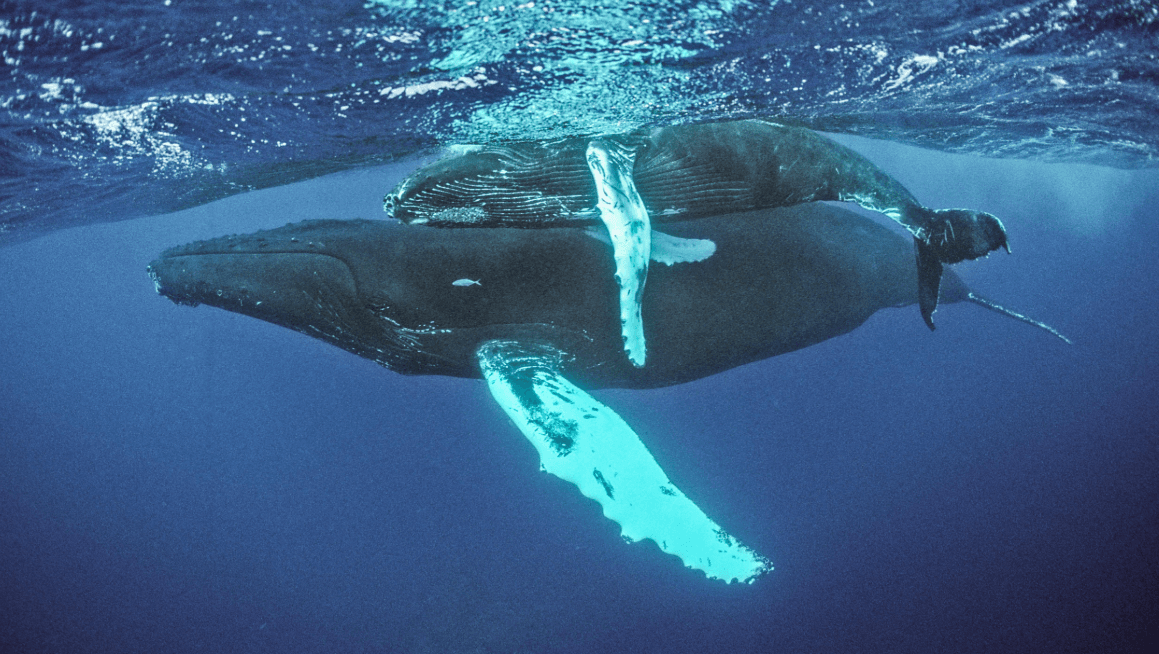
A whale swimming actively, resting, traveling, or caring for a calf may encounter different energetic demands. The effect of surrounding conditions therefore cannot be assessed from temperature alone.
Scientists need observations of both the environment and the whale's behavior to investigate possible relationships.
Why Do Humpback Whales Have Blubber?
Blubber is a thick layer of fat beneath a whale's skin. It provides insulation, stores energy, and contributes to the animal's overall body condition.
This layer helps humpback whales maintain their internal temperature despite living in water that can be much colder than their bodies.
Blubber is particularly important for a migratory species that travels between different marine environments. Humpbacks encounter substantial differences in water temperature throughout their annual cycle.
However, insulation does not mean that all temperatures are equally suitable under every circumstance. The balance between heat production, heat loss, and energy use remains part of a whale's physiology.
Could Temperature Changes Make a Whale Swim Faster?
A whale may change its swimming speed for many reasons, including traveling, interacting with another whale, responding to its surroundings, or changing its activity.
It would be misleading to assume that a whale swimming faster has detected a temperature change or is trying to escape colder water.
To establish whether temperature influenced swimming speed, researchers would need to compare temperature measurements with movement data while accounting for other possible explanations.
For visitors in Samaná Bay, a whale's speed alone is not a reliable indicator of how it feels about the surrounding water.
How Ocean Temperature Influences the Whale's Wider Habitat
Temperature can influence humpback whales indirectly by affecting the marine ecosystem around them.
Seasonal conditions
North Atlantic humpback whales migrate between feeding areas at higher latitudes and breeding grounds in warmer regions, including the Caribbean.
Their seasonal movements are shaped by a combination of biological and environmental factors. The warmer conditions of breeding grounds are part of the broader seasonal pattern, but temperature alone does not explain the timing or destination of every whale.
Food availability
Temperature can influence the distribution and productivity of marine organisms, including species that form part of a whale's food supply.
Humpback whales build energy reserves while feeding in productive feeding grounds. During their seasonal presence in Samaná Bay, breeding and reproductive activities are important aspects of their behavior.
This means temperature-related changes to feeding ecosystems can have consequences that extend beyond an individual encounter in the Caribbean.
Ocean circulation
Ocean currents transport water with different temperature characteristics. They also influence the movement of nutrients and marine organisms.
Changes in circulation can therefore affect the environmental conditions whales experience, although the effects vary by location and time.
Does Samaná Bay Have the Same Water Temperature Everywhere?
No. Ocean temperature can vary with depth, currents, weather, and the mixing of water masses.
Shallow coastal water may respond to sunlight and weather differently from deeper offshore water. Conditions can also vary between locations and across seasons.
These variations are normal features of marine environments. A single temperature reading cannot describe every part of Samaná Bay or explain the conditions experienced by every whale.
Researchers studying the region can combine temperature measurements with oceanographic information and whale observations to understand how local conditions change over time.
Can Whale Watchers See a Whale React to Temperature?
Usually, not in a way that can be identified with confidence from a boat.
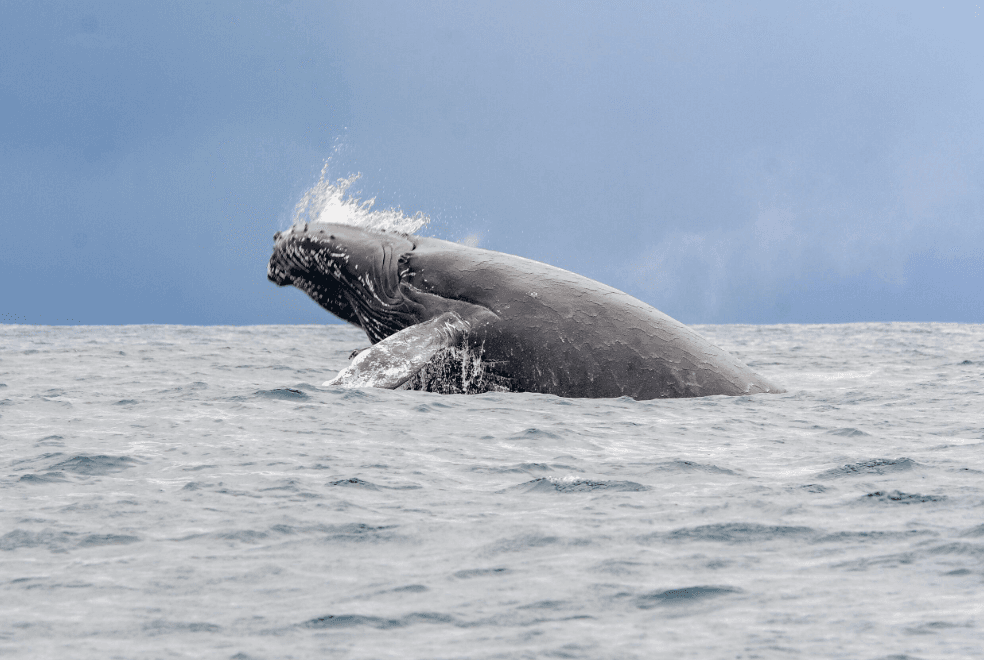
A humpback whale may change direction, surface, dive, or swim at a different speed during an encounter. However, these behaviors have many possible explanations, and a surface observation generally cannot establish that a temperature change caused them.
The temperature difference may also occur below the surface, where visitors cannot directly observe the whale's environment.
Responsible guides can explain visible behaviors and the broader marine setting, but they should avoid making unsupported claims about what a whale is feeling or why it has changed direction.
How Scientists Monitor Ocean Temperature and Whale Behavior
Scientists use several methods to study environmental conditions and their relationship with marine mammals.
Oceanographic instruments: Temperature sensors can measure water conditions at different depths and locations.
Satellite observations: Satellite-based measurements can help researchers examine sea-surface temperature patterns over large areas. These measurements do not necessarily reveal the temperature at the depth where a whale is swimming.
Animal tracking: Suitable research tags can provide information about whale movement and, depending on the instrument, other aspects of diving behavior or the surrounding environment.
Long-term observation records: Comparing whale sightings and environmental measurements over time can help researchers investigate seasonal patterns and possible relationships.
Statistical analysis: Researchers must account for other influences, such as season, prey availability, and whale activity, before attributing a behavioral change to temperature.
Together, these methods help distinguish a plausible explanation from a demonstrated scientific relationship.
How Climate Change Differs From a Sudden Temperature Change
A brief temperature fluctuation and long-term ocean warming are different environmental processes.
Sudden changes may occur as a whale moves between water masses or as currents shift. Climate change involves persistent changes in average conditions over longer periods, alongside other changes in the marine environment.
Long-term ocean warming can affect marine ecosystems, the distribution of prey, and the conditions experienced across migratory routes. These effects may influence humpback whales indirectly, particularly through changes in their feeding grounds.
However, the effects vary among locations and populations. Understanding what is happening in Samaná Bay requires evidence specific to the region and the wider North Atlantic population.
Frequently Asked Questions
Can humpback whales feel changes in ocean temperature?
Their bodies interact with the surrounding water, and temperature affects heat exchange. However, the precise way an individual whale senses and responds to a particular temperature change cannot usually be determined from a surface sighting.
Will a humpback whale leave Samaná Bay if the water becomes colder?
Not necessarily. Whale movements are influenced by multiple factors, including seasonal behavior and environmental conditions. A change in temperature alone does not establish that a whale will leave the bay.
Does warm water make humpback whales more comfortable?
Temperature suitability depends on the animal's physiology and environmental circumstances. It is too simplistic to assume that warmer water is always better for a humpback whale.
Can temperature changes affect humpback whale migration?
Temperature can influence the wider marine environment and may be associated with changes in migration-related conditions. However, migration is influenced by several factors, and the effects of temperature vary by population and location.
Can tourists measure ocean temperature during whale watching?
Some operators or research programs may collect environmental measurements, but ordinary whale-watching trips do not necessarily include water-temperature monitoring. Visitors should ask their operator if they are interested in local ocean conditions.
What is the best season to see humpback whales in Samaná Bay?
The main whale-watching season generally runs from January through March. Whales may arrive earlier or remain later, and sightings vary from year to year.
Conclusion
Ocean temperature is an important part of the environment that humpback whales experience in Samaná Bay. These marine mammals have blubber and other physiological adaptations that help them maintain their internal temperature, but the surrounding environment can still influence their energy balance and the ecosystems they depend on.
A sudden temperature change does not automatically trigger a visible reaction. To understand how temperature affects whale behavior, scientists must consider the magnitude and duration of the change alongside other biological and environmental factors.
For visitors, the key lesson is that the ocean's hidden conditions are more complex than its surface appearance suggests. Learning about temperature helps travelers understand the marine environment while appreciating humpback whales without assigning unsupported explanations to their movements.

Local explorer & expert guide in Saona Island Beach.