How Do Scientists Investigate Whether Humpback Whales Use Different Areas of Samaná Bay at Different Times of Day?
Samaná Bay in the Dominican Republic is widely known as an important seasonal destination for humpback whales. During the breeding season, whales can be observed in the surrounding waters, creating opportunities for whale watching and scientific research.
One interesting research question is whether humpback whales use different parts of the bay at different times of day. For example, do recorded sightings occur more frequently in one area during the morning and in another during the afternoon Or do apparent changes simply reflect where boats travel and how easily whales can be spotted?
Scientists can investigate these questions by collecting consistent observations, recording the time and location of each sighting, and accounting for the limitations of surveys conducted at sea.
Why Study Whale Locations Throughout the Day?
Humpback whales do not necessarily remain in one location. They may travel, rest near the surface, interact with other whales, dive, or move between different parts of their habitat.
Studying where whales are observed at different times can help researchers understand their daily distribution. It can also help identify whether particular areas deserve further investigation for conservation or responsible whale-watching management.
However, a change in sighting location does not automatically mean whales follow a fixed daily routine. Researchers need repeated observations before drawing conclusions about consistent patterns.
How Do Researchers Collect Time-Based Sighting Data?
A useful study begins with a standardized observation plan. Researchers can survey selected sections of Samaná Bay at scheduled times, such as morning, midday, and afternoon.
For each observation, they may record:
- Date and local time.
- Geographic coordinates of the sighting.
- Number of whales observed.
- Estimated distance from the observation platform.
- Whale behavior, when it can be identified reliably.
- Sea conditions, visibility, wind, and cloud cover.
- Survey route, duration, and distance traveled.
These details allow scientists to compare observations across different periods while considering the conditions under which the data were collected.
A record of one whale seen at 9 a.m., for instance, provides a location and time. It does not, by itself, establish that whales generally prefer that area in the morning.
Comparing Morning, Midday, and Afternoon Sightings
Researchers can divide observation records into time periods and map the locations of whale sightings. They can then compare the number and distribution of sightings recorded during each period.
Suppose a hypothetical survey records more whales in the western part of the study area during morning surveys and more in the eastern part during afternoon surveys. This could suggest a time-related distribution pattern, but other explanations must be examined first.
Perhaps morning surveys spent more time in western waters. Maybe afternoon visibility improved, or sea conditions made whales easier to detect in a different area. Researchers must account for such differences before concluding that whale distribution genuinely changes throughout the day.
The important question is not just where whales were seen, but how much observation effort was devoted to each area and how likely whales were to be detected.
How Can Scientists Distinguish Whale Movement From Survey Bias?
Survey bias occurs when observation methods make some whales or locations more likely to be recorded than others.
Several factors can affect whale sightings:
Unequal survey effort: A boat that spends longer in one section of the bay may record more whales there simply because it searches that area more thoroughly.
Changing sea conditions: Waves, glare, wind, and visibility can make whales easier or harder to spot at different times.
Boat routes: Commercial whale-watching routes may concentrate observations in popular areas rather than representing the entire bay.
Whale behavior: A whale that surfaces frequently may be easier to observe than one that remains underwater for longer periods.
Repeated sightings: The same whale or group may be recorded more than once, making the number of sightings different from the number of individual whales.
Researchers can reduce these problems by using repeatable survey routes, recording observation effort, applying appropriate statistical methods, and identifying individual whales when reliable photographs are available.
Can Photo Identification Reveal Daily Movement?
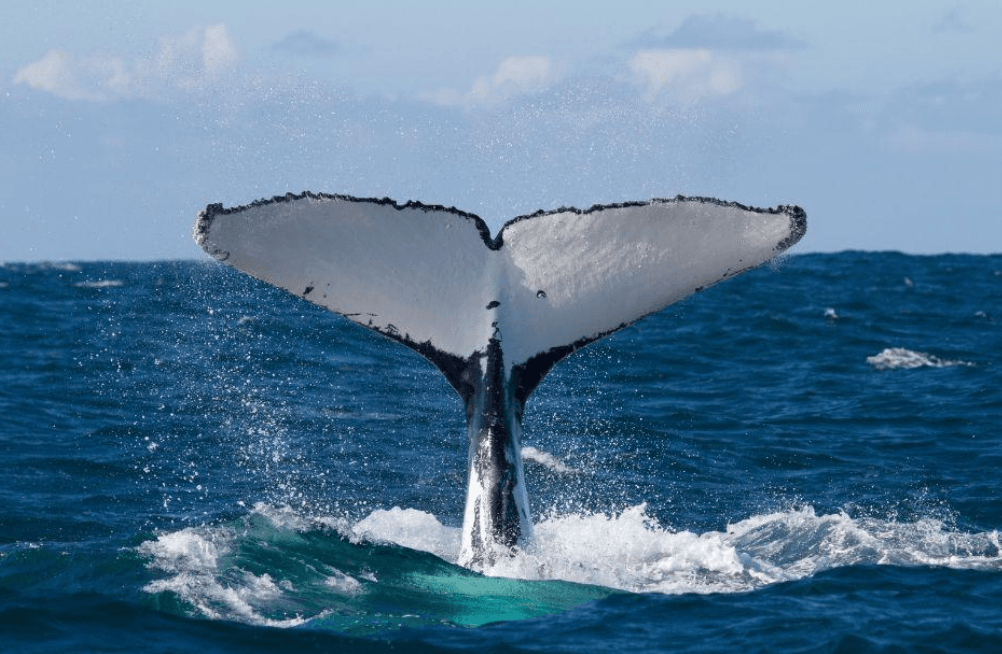
Photo identification can help researchers distinguish individual humpback whales using distinctive markings and patterns on their tail flukes.
If a recognizable whale is photographed at one location in the morning and again elsewhere later in the day, the records may provide evidence of movement between those locations.
Researchers must still confirm that the photographs show the same individual and check the timing and location records. Even then, two sightings establish only that the whale was observed in two places; they do not reveal its complete route between them.
Combining photo identification with systematic location records can provide more useful evidence than simply counting all sightings.
What Role Do Maps and Statistical Analysis Play?
Researchers can plot sighting coordinates on a map and separate the records by observation period. This helps reveal whether sightings appear concentrated in particular areas at particular times.
They may also calculate sighting rates, such as the number of sightings per unit of survey effort. More advanced analyses can account for weather, sea state, observation conditions, survey route, and other variables that affect detection.
If researchers have enough reliable data, they can test whether the observed distribution differences are consistent across multiple survey days.
A pattern that repeatedly appears under comparable conditions is more convincing than one based on a single day. Even a consistent pattern should be described according to the strength and limitations of the evidence.
What Could Daily Distribution Patterns Mean for Whale Conservation?
Understanding when and where humpback whales are observed may help researchers identify areas for additional monitoring. It may also support discussions about responsible boat operations and the management of whale-watching activity.
For example, if reliable studies identify repeated concentrations of whales in a particular area during certain periods, managers could investigate whether additional guidance for vessel traffic is appropriate.
However, conservation decisions should not be based on unverified assumptions about daily movement. Researchers need sufficient evidence, and any management measures should follow applicable regulations and local conservation guidance.
For visitors, the practical lesson is simple: whale sightings depend on natural behavior and environmental conditions. A location that produces sightings in the morning is not guaranteed to do so every day.
What Are the Limitations of This Research?
Studying daily whale distribution at sea can be challenging. Researchers may not be able to survey every part of the bay equally, and weather can interrupt planned observations.
Whales also spend time underwater, meaning that their actual locations may differ from the locations where they are observed surfacing. In addition, a sighting database may combine records from research teams, whale-watching boats, or different observation methods that were not designed for direct comparison.
Scientists should therefore distinguish between a change in recorded sightings and a demonstrated change in whale distribution. Reliable conclusions require consistent methods, adequate sample sizes, and transparent reporting of uncertainty.
No specific morning-versus-afternoon preference should be attributed to humpback whales in Samaná Bay without supporting local research.
Frequently Asked Questions
Do humpback whales move around Samaná Bay during the day?
They can move between locations, but their exact daily movement patterns vary. A reliable description of local patterns requires systematic observations rather than isolated sightings.
Are whales easier to see in the morning or afternoon?
There is no universal answer. Visibility, wind, sea conditions, whale behavior, and survey location can all affect the chance of seeing a whale.
How do scientists know whether sightings involve the same whale?
Researchers may compare photographs of tail flukes and other identifying features. The reliability of an identification depends on image quality and the distinctiveness of the markings.
Does a higher number of sightings mean more whales are present?
Not necessarily. More sightings may reflect increased survey effort, better visibility, repeated observations of the same individuals, or a genuine difference in whale presence.
Can daily whale movement studies improve whale watching?
They can contribute useful information about whale distribution and support informed management discussions. Any operational changes should be based on robust evidence and relevant local rules.
Conclusion
Investigating whether humpback whales use different areas of Samaná Bay at different times of day requires more than plotting a few sightings on a map. Scientists need accurate time and location records, consistent survey effort, information about sea conditions, and methods for accounting for repeated sightings and missed detections.
With sufficient data, researchers can test whether daily distribution patterns are consistent and distinguish likely whale movements from differences in observation conditions. This work can improve understanding of humpback whale habitat use and contribute to responsible conservation in the Dominican Republic.
For visitors planning a whale-watching trip, the most important point is that sightings are never guaranteed at a particular time or location. Respecting wildlife guidance and following responsible viewing practices help protect these remarkable marine mammals.

Local explorer & expert guide in Saona Island Beach.